
Turkey: A Journey Between Continents
Turkey
Turkey is a bridge between continents, a land where the whispers of ancient empires harmonize with the pulse of modern life. From the minaret-pierced skyline of Istanbul to the surreal "fairy chimneys" of Cappadocia, this nation offers a sensory journey unlike any other. Whether you are exploring sun-drenched Mediterranean coasts or walking through the marble streets of Greco-Roman cities, Turkey promises a deep and authentic connection to history. This guide highlights 8 essential stops that capture the soul and majestic beauty of this transcontinental gem, providing an immersive look at the crossroads of the East and West.
1. Hagia Sophia: A Masterpiece of Two Worlds
The Hagia Sophia stands as an eternal symbol of Istanbul's layered history. Originally commissioned as a cathedral in the 6th century by Emperor Justinian, its massive dome was an architectural miracle of the Byzantine era. For nearly a thousand years, it was the largest church in the world before being transformed into a mosque in 1453 elevation, and today it remains a pinnacle of cultural fusion. Its structural genius has survived earthquakes and empires, standing as a testament to the enduring power of human creativity.
Stepping inside, you are greeted by a breathtaking interior where golden Christian mosaics coexist with colossal Islamic calligraphy disks. The way light filters through the forty windows at the base of the dome creates an ethereal atmosphere that has moved visitors for centuries. It is not just a building; it is a canvas where the history of two great faiths is painted in stone and light. The upper galleries, once reserved for the Empress and her court, offer an intimate look at the mosaics and the ancient runes carved into the railings by Norse guardsmen.
The aura of the Hagia Sophia is one of deep, resonant silence, even amidst the crowds. It is a place where every arch and pillar has witnessed the coronation of emperors and the prayers of sultans. As you exit through the monumental Bronze Gate, you carry with you a sense of the immense scale of time that has passed within these hallowed walls. It remains one of the most significant architectural achievements in human history, bridging the gap between the ancient world and the present day.
Travel Tip: The Hagia Sophia is an active mosque, so visitors must remove their shoes and women should cover their hair with a scarf (available at the entrance). To experience the dome in the best light, visit during the early morning shortly after it opens to the public.
Luxury Insight: For an unparalleled stay in Istanbul, book a palace-side suite at the Çırağan Palace Kempinski. This former Ottoman palace on the Bosphorus allows you to arrive at the Hagia Sophia via a private yacht transfer, avoiding the city's notorious traffic.
2. Cappadocia: The Land of the Moon
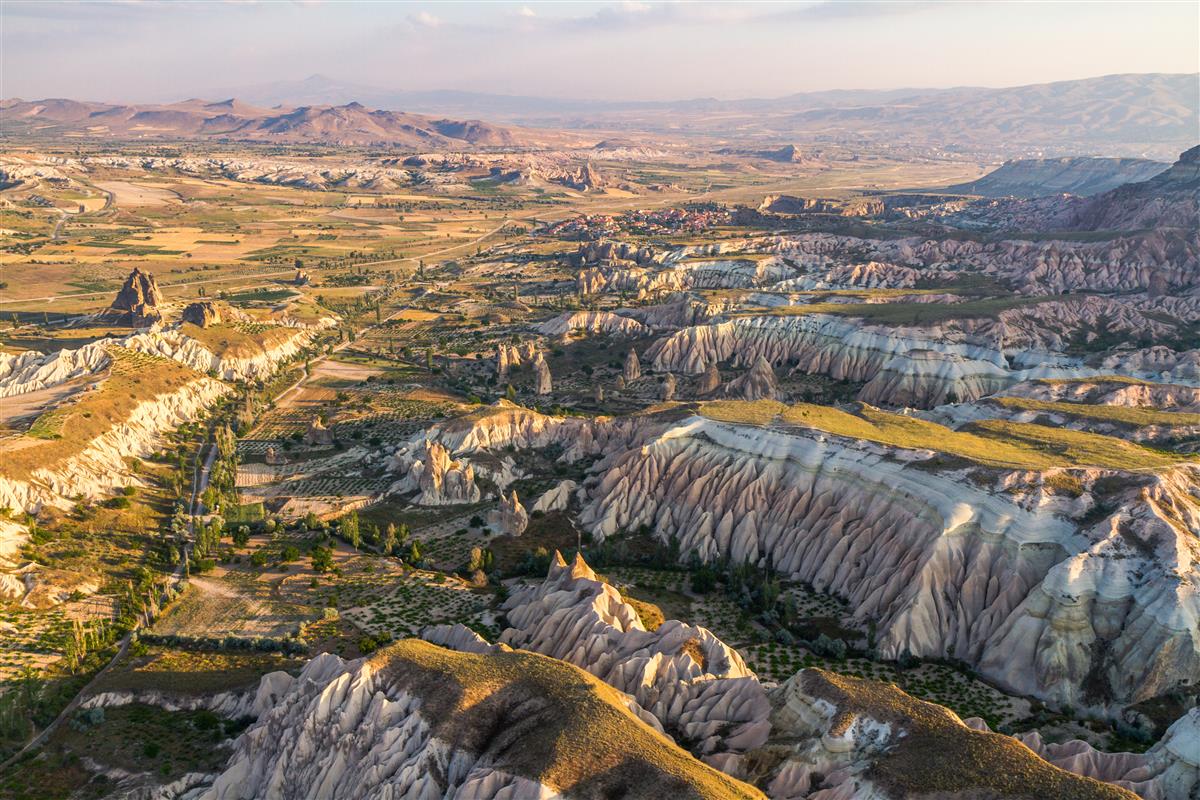
Cappadocia is a geological dreamscape located in the heart of Anatolia, formed by volcanic eruptions and millions of years of erosion. The landscape is dotted with "fairy chimneys"—towering, spindly rock formations that early inhabitants carved into homes, churches, and entire underground cities. It is a place where nature has acted as a sculptor, creating a terrain so surreal that it feels like stepping onto another planet or into a lost world of fantasy.
The best way to experience this silent, honeycombed world is from above. As the sun begins to rise over the horizon, hundreds of hot air balloons take to the sky in a choreographed dance of light and shadow, offering a panoramic view of the golden plateaus and twisting valleys. On the ground, the Göreme Open Air Museum showcases ancient cave churches decorated with beautifully preserved Byzantine frescoes, revealing a hidden history of early Christian life and refuge. The rock-cut architecture is a miracle of adaptation, showing how humans have thrived in harmony with this rugged environment.
Exploring the underground cities like Derinkuyu, which once housed thousands of people and livestock in a sophisticated network of tunnels and ventilation shafts, is a humbling experience. It demonstrates a level of prehistoric engineering and social organization that is truly staggering. Cappadocia is a place where every cave has a secret and every sunrise is a masterpiece, offering a spiritual and visual journey that stays with you long after you leave its volcanic silences.
Travel Tip: Balloon flights are highly dependent on wind conditions and can be cancelled at the last minute. Stay at least three nights in Cappadocia to increase your chances of a successful flight. Wear layers, as the Turkish central plateau can be very cold before sunrise, even in the summer.
Luxury Insight: Stay in the "Sultan Suilt" at the Museum Hotel in Uchisar. As Cappadocia's only Relais & Châteaux property, it offers rooms filled with genuine antiques and a private wine tap in your suite that pours local Anatolian varietals directly from the cellar.
3. Pamukkale: The Shimmering Cotton Castle
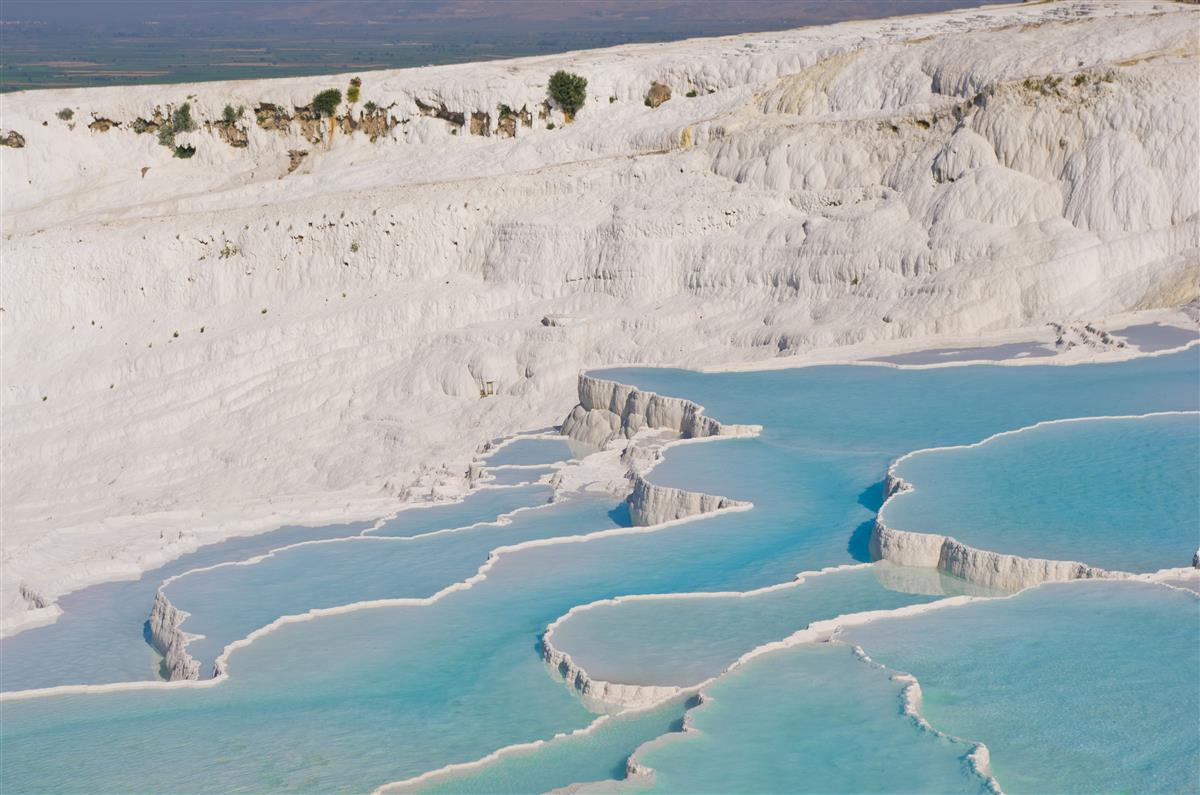
Pamukkale, which literally translates to "Cotton Castle" in Turkish, is a natural wonder of gleaming white travertine terraces that appear like a frozen waterfall on the side of a mountain. These terraces are formed by mineral-rich thermal waters that have cascaded down the hillside for millennia, cooling and hardening into snowy-white basins. It is one of the most visually striking natural sites in the world and has been a celebrated spa destination since the time of the Romans.
Visitors can walk barefoot across the soft white calcium deposits, dipping their feet into the warm, milky-blue thermal pools that are said to have significant healing properties for the skin and joints. The contrast between the brilliant white of the terraces and the lush green plains of the Maeander Valley below is particularly breathtaking during the golden hour, when the pools reflect the pink and orange hues of the setting sun. It is a landscape that feels both ancient and ephemeral, a masterpiece of geological chemistry.
Perched directly above the white terraces are the extensive ruins of Hierapolis, an ancient Greek and Roman city founded as a thermal resort. Here, you can wander through one of the largest ancient necropolises in Turkey or swim in the "Antique Pool" (Cleopatra’s Pool). Gliding over authentic submerged Roman columns in the warm, bubbling water is a unique experience that combines natural relaxation with a physical connection to the classical past. Pamukkale remains a place where the earth’s internal heat creates a scene of pure, cooling beauty.
Travel Tip: Shoes are strictly prohibited on the white travertine to prevent damage and staining, so be prepared to carry them and walk on the sometimes-slippery wet stone. Bring a swimsuit and a towel if you plan to soak in the Antique Pool or the public terrace basins.
Luxury Insight: Arrange for a private guided tour of the Hierapolis ruins at sunset, followed by a treatment at one of the high-end thermal spas in the nearby village of Karahayit, which feature the region’s unique red thermal waters.
4. Ephesus: The Grandeur of the Romans
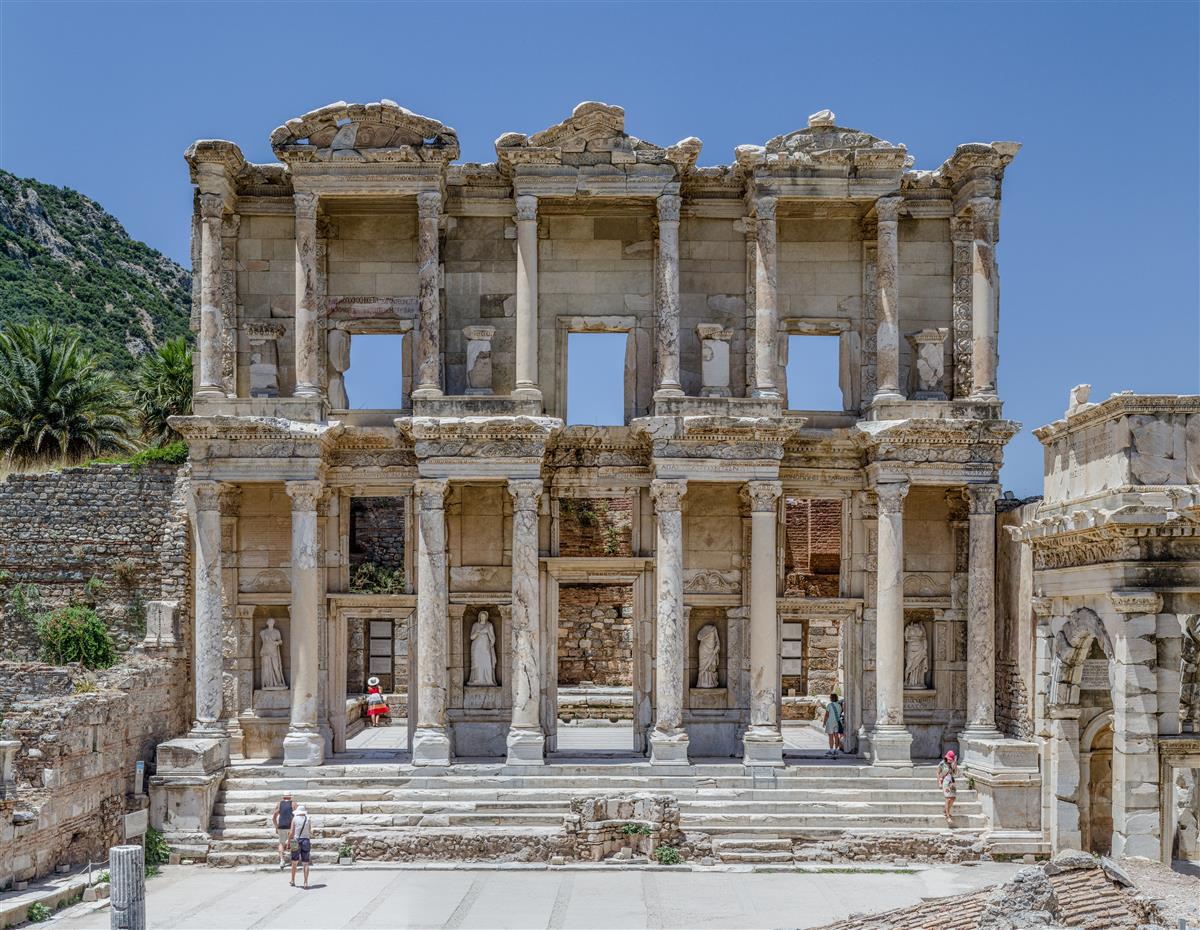
Ephesus was once the second largest city in the Roman Empire and a major commercial and religious hub in the Mediterranean. Today, it stands as one of the best-preserved and most evocative ancient sites on earth. Walking down the original marble-paved streets, you can easily sense the bustle and sophistication of a metropolis that was once home to over 250,000 citizens. The sheer scale of the ruins, from the massive amphitheaters to the delicate mosaics of the wealthy homes, is a staggering reminder of the power of the classical world.
The undisputed centerpiece of Ephesus is the Library of Celsus. Its soaring two-story facade, decorated with statues representing Wisdom, Virtue, and Knowledge, is an icon of ancient architecture. Nearby, the Great Theatre—carved into the side of Mount Pion—could once seat 25,000 spectators and still possesses acoustic properties that allow a speaker on the stage to be heard clearly in the highest rows. It is a place where you can sit on the same stone benches where Roman citizens once cheered for gladiators and actors.
A highlight of any visit is exploring the Terrace Houses, where the elite of Ephesus lived in stunning luxury. These villas feature incredibly well-preserved floor mosaics and intricate wall frescoes that offer a vivid, colorful look into the domestic lives and artistic tastes of the Roman upper class. Ephesus is not just a collection of ruins; it is a city that feels as if its inhabitants have only just stepped away, leaving behind a marble blueprint of their magnificent civilization.
Travel Tip: Ephesus is a large, open site with very little shade. Visit as early as possible (the site opens at 8 AM) to beat the heat and the busloads of cruise ship passengers. Wear a hat, bring water, and ensure you have comfortable walking shoes for the uneven marble paths.
Luxury Insight: Charter a private luxury gulet from nearby Kuşadası or Bodrum to reach the coast near Ephesus. A private transfer can whisk you to the ruins for a personalized tour, followed by an offshore seafood lunch on the deck of your boat.
5. The Blue Mosque: An Iznik Masterpiece
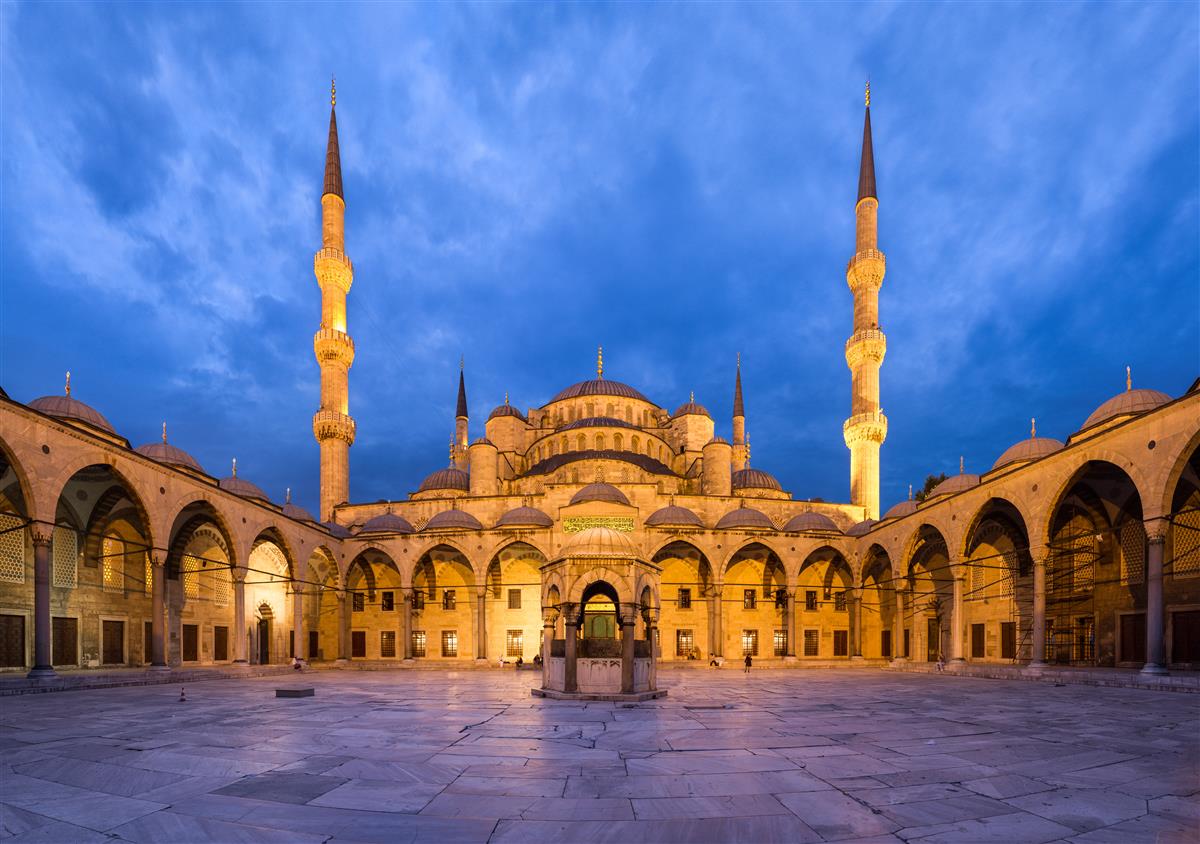
Known officially as the Sultan Ahmed Mosque, the Blue Mosque is the most famous landmark of Istanbul’s skyline. Built in the early 17th century by Sultan Ahmed I, it was designed to surpass the nearby Hagia Sophia in both scale and decorative splendor. Famous for its six slender minarets—a rare feature that caused a scandal at the time of its construction—the mosque is a pinnacle of Ottoman religious architecture, combining classical Byzantine elements with traditional Islamic design.
The interior of the mosque is a sea of blue and gold. Its nickname comes from the more than 20,000 handmade Iznik ceramic tiles that line the walls, featuring intricate patterns of tulips, lilies, and cypresses in over fifty different designs. Light pours into the vast central space through more than 200 stained glass windows, illuminating the massive chandeliers and the soft, expansive carpets. The atmosphere is one of profound peace and spiritual majesty, designed to make the worshipper feel both small and connected to the divine.
The mosque’s courtyard is the largest of all Ottoman mosques, serving as a bustling meeting place for both locals and travelers. Despite being one of the world’s most visited tourist sites, the Blue Mosque remains an active house of prayer, where the call to the faithful echoes five times a day across the Sultanahmet square. It is a living monument to the enduring faith and artistic achievement of the Ottoman Empire, standing as a beautiful and silent heart of the city.
Travel Tip: The mosque is closed to tourists during the five daily prayer times. To avoid long lines, arrive about 30 minutes before the mid-morning opening. If you don't have a headscarf or modest clothing, the mosque provides them for free at the visitor entrance.
Luxury Insight: Book a private sunset dinner on the rooftop of the "Seven Hills Restaurant." This vantage point offers an incredible eye-level view of the Blue Mosque’s domes and minarets on one side and the Hagia Sophia on the other, all with the Bosphorus in the background.
6. Topkapi Palace: The Golden Heart of an Empire
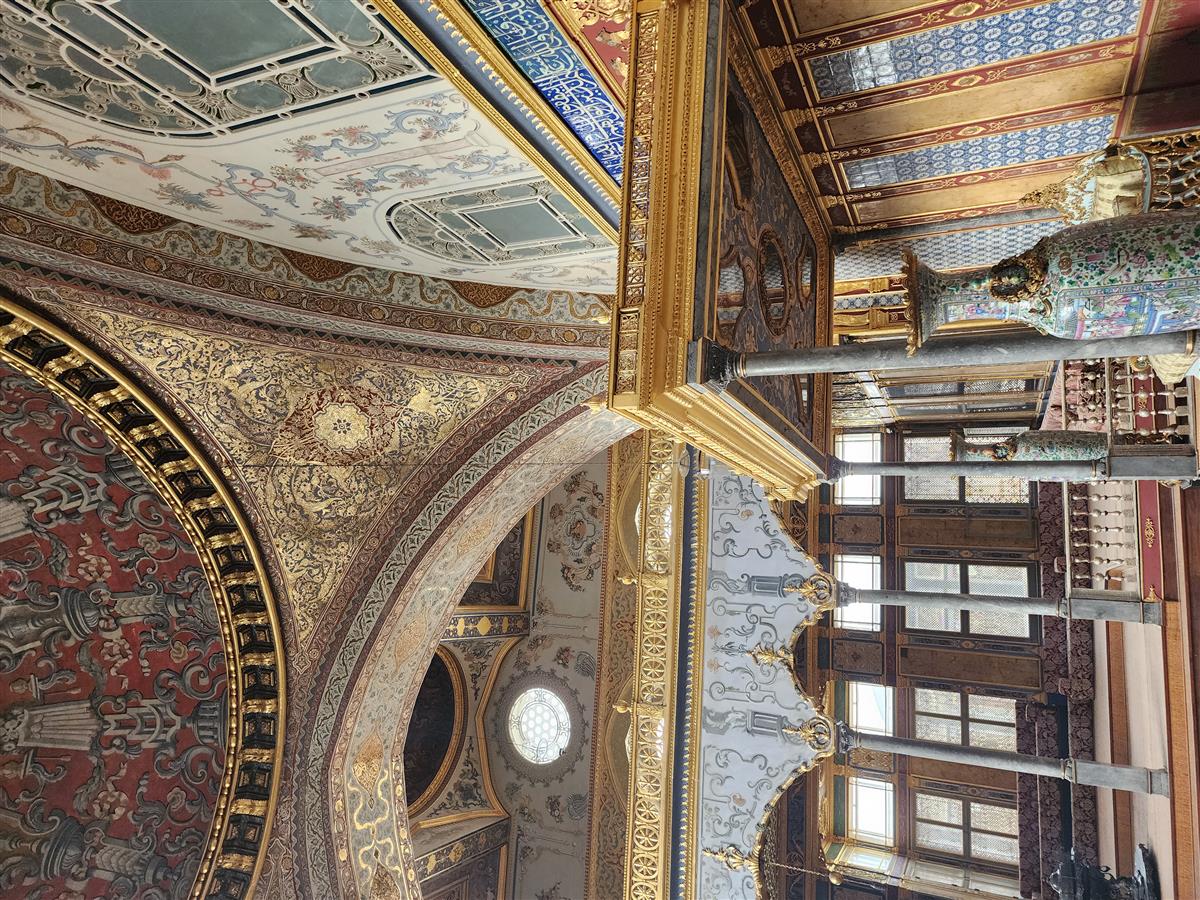
For nearly four centuries, Topkapi Palace was the absolute center of the Ottoman Empire—a sprawling complex that served as the primary residence of the Sultans and the seat of their government. Perched on Seraglio Point with commanding views of the Bosphorus, the Golden Horn, and the Sea of Marmara, the palace is a labyrinth of secret gardens, ornate pavilions, and treasure-filled galleries. It is a place where the history of an empire that stretched across three continents was decided within golden walls.
The palace is divided into four main courtyards, each more private and opulent than the last. The Harem section is perhaps the most fascinating, a "forbidden" world of hundreds of rooms where the Sultan’s family and concubines lived in high-security luxury. The walls are covered in the finest Iznik tiles and the ceilings shimmer with gold leaf. Meanwhile, the Royal Treasury houses some of the most famous jewels in the world, including the 86-carat Spoonmaker’s Diamond and the emerald-encrusted Topkapi Dagger, providing a tangible sense of the empire's vast wealth.
Walking through the Fourth Courtyard, with its marble terraces and the elegant Baghdad Kiosk, you can appreciate the Ottoman love for nature and "kief" (the art of relaxation). The views across the water are some of the best in Istanbul, serving as a constant reminder of the strategic power of the city. Topkapi is more than a museum; it is a gilded time capsule of the Ottoman courtly life, where every corridor whispers of intrigue, power, and architectural beauty.
Travel Tip: The palace complex is very large, so allow at least three to four hours for a thorough visit. The Harem requires a separate ticket, but it is the most beautiful part of the palace and should not be missed. Consider using an audio guide to navigate the many galleries and collections.
Luxury Insight: Arrange for a private "After Hours" tour of the Harem or the Treasury through a specialist luxury travel agency. This provides a rare opportunity to appreciate the exquisite tile-work and the Imperial jewels without the usual daytime crowds.
7. Antalya: The Turquoise Gate of the Riviera
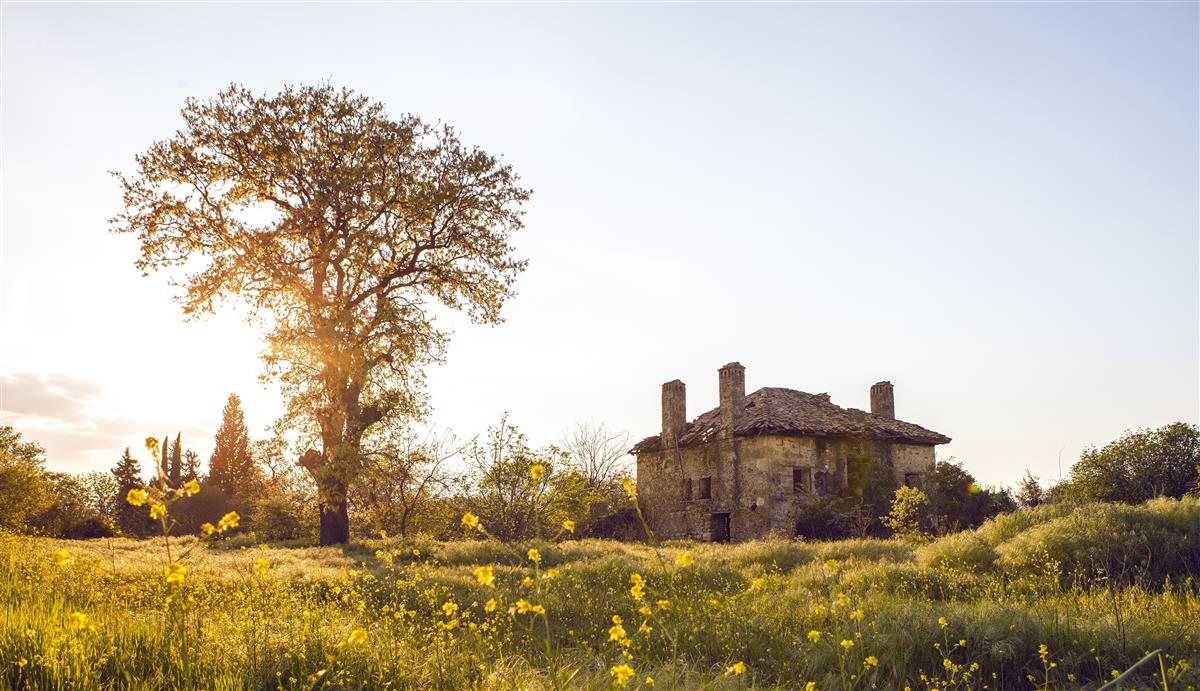
Antalya is the shimmering capital of Turkey's Mediterranean coast, a city where the jagged peaks of the Taurus Mountains meet the crystal-clear waters of the Turquoise Riviera. It is a destination of dualities: a vibrant, modern metropolis that surrounds a perfectly preserved historic heart. Kaleiçi, the old city, is a maze of narrow, winding cobblestone streets lined with restored Ottoman mansions, hidden gardens, and the monumental Hadrian’s Gate, which has stood since the Roman Emperor visited in 130 AD.
The natural drama of Antalya is spectacular. In the heart of the city, the lower Düden Waterfalls plunge directly off a 40-meter cliff into the Mediterranean Sea, a sight best viewed from a boat. The region’s beaches, such as the white sands of Lara and the dramatic cliffs of Konyaaltı, offer some of the best swimming and sunbathing in the Mediterranean. Beyond the city limits, the landscape is dotted with world-class ancient sites like the perfectly preserved theater of Aspendos and the ruins of Perge, making it a paradise for both nature lovers and history enthusiasts.
Whether you are sipping a traditional Turkish tea in the old harbor, hiking a section of the famous Lycian Way, or exploring the modern boutiques of the city center, Antalya exudes a feeling of effortless Mediterranean charm. It is a place where the sun shines for over 300 days a year, inviting you to slow down and enjoy the "blue cruise" lifestyle that has made the Turkish coast a favorite for travelers from around the world.
Travel Tip: While the beaches are beautiful, the real magic of Antalya is in the Old Town (Kaleiçi). Stay within the walls of the old city to be within walking distance of the most charming restaurants and the historic harbor. Renting a car is the best way to explore the mountain villages and ancient ruins nearby.
Luxury Insight: Charter a private traditional wooden "Gulet" for a day-long cruise along the coastline. These handcrafted boats offer a level of classic luxury that is quintessential to the Turkish Riviera, allowing you to swim in secret coves that are inaccessible by land.
8. Mount Nemrut: The Throne of the Gods
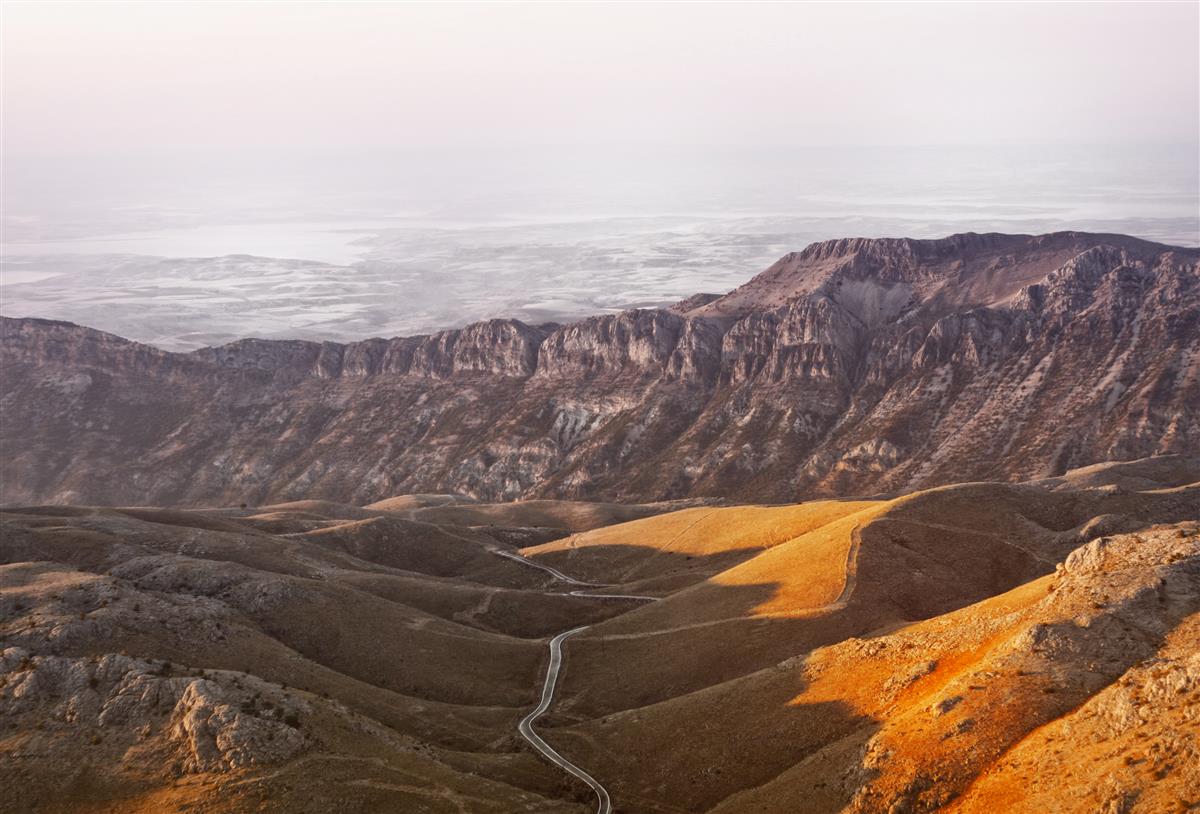
Mount Nemrut is one of the most mysterious and awe-inspiring sites in all of Turkey. Located in the remote southeast on a 2,134-meter peak, it is home to the colossal tomb-sanctuary of King Antiochus I of Commagene. Built in the 1st century BC, the site features massive stone statues of the King himself alongside a pantheon of Greek and Persian gods, as well as giant eagles and lions. Over the centuries, earthquakes have toppled the heads of these statues, which now sit on the ground, gazeing out over the vast Anatolian plateau like silent, immortal sentinels.
The experience of standing on the East or West terrace as the first light of dawn (or the last light of sunset) hits the stone faces is profoundly spiritual. The statues, which are nearly 10 meters tall, take on a golden, ancient glow against the backdrop of the surrounding peaks. It is a place of absolute, heavy silence, often referred to as a "Throne for the Gods" because of its literal and symbolic height. The engineering required to transport these massive stone blocks to the summit of the mountain over two thousand years ago remains a marvel and a testament to the megalomaniacal ambition of the Commagene kings.
Reaching the summit requires a journey into the wild, rugged heart of southeastern Turkey, but the reward is a visual and emotional experience that is without parallel. Mount Nemrut is a place where the veil between the earth and the heavens feels thin, and where the pride of an ancient king has left behind a masterpiece of rubble and majesty that continues to haunt and inspire everyone who makes the pilgrimage to its heights.
Travel Tip: The site is usually only accessible from May to October; during the winter, the mountain is often blocked by several meters of snow. The walk from the car park to the summit takes about 20-30 minutes on a steep path at high altitude, so take it slow and bring warm clothes for the summit wind.
Luxury Insight: Arrange for a private sunrise tour departing from the nearby town of Adıyaman or Kahta. Having a private driver and guide ensures you reach the summit at the perfect moment for the first light, and you can enjoy a restorative breakfast in a local mountain inn afterward.
The Endless Magic of Turkey: Turkey is a destination that captures the heart and never lets go. From the golden mosaics of Istanbul to the silent, stone faces of Mount Nemrut, it is a country that offers a richness of experience found nowhere else on earth. We hope this guide inspires you to embark on your own luxury adventure through this incredible transcontinental land. Safe travels and Hoşça kal!