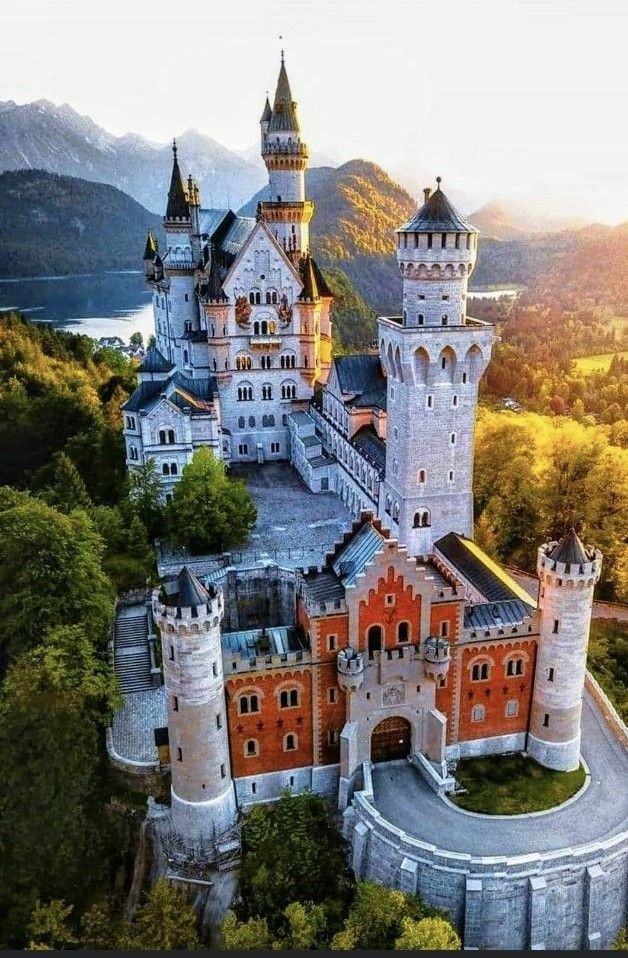
Germany's Fairy Tale Castles and Modern Cities
Germany
Germany is a land of infinite variety, where the heavy echoes of history, the serenity of ancient forests, and the pulse of ultra-modern cities exist in a fascinating, deliberate harmony. From the vibrant, multi-layered streets of Berlin to the romantic, mist-shrouded castles of the Bavarian Alps, each region of Deutschland tells a distinct and compelling story. It is a country that honors its complex past while boldly defining the future of design, engineering, and cultural expression. This exclusive guide takes you on a journey through 8 selected highlights—from world-famous icons like Neuschwanstein to the hidden urban oases of the capital. Whether you are exploring architectural marvels, relaxing by a pristine lake, or stepping into a fairytale landscape, these destinations showcase the very best of Germany's diverse and enduring spirit.
1. Kaiser Wilhelm Memorial Church: A Scared Beauty
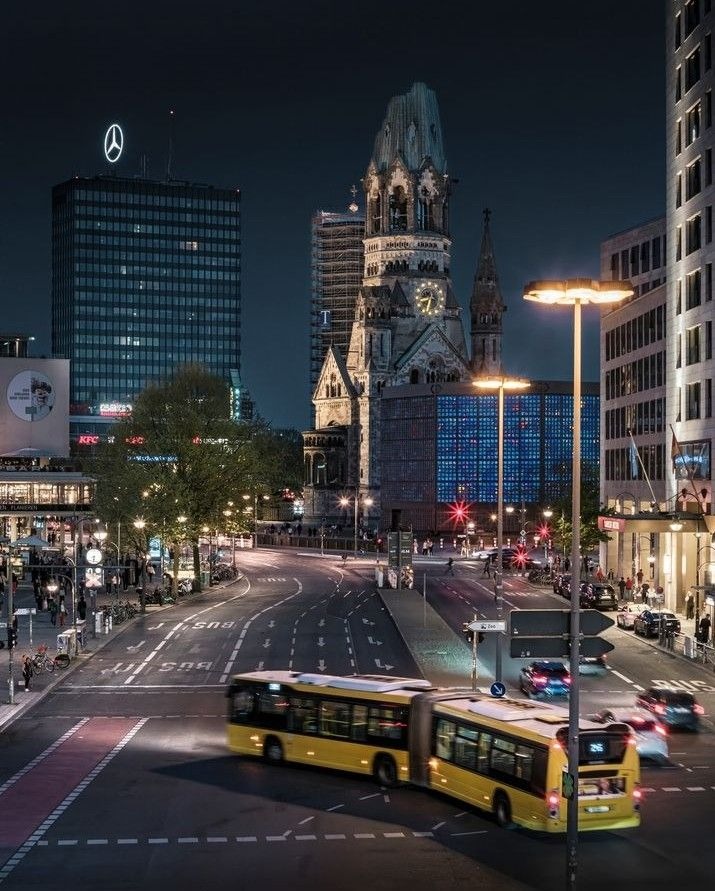
Standing in the heart of West Berlin on the famous Kurfürstendamm, the Kaiser Wilhelm Memorial Church (Gedächtniskirche) is one of the most poignant symbols of peace and reconciliation in Europe. The original church, a Neo-Romanesque masterpiece built in the 1890s, was severely damaged during a World War II air raid in November 1943. While much of Berlin was painstakingly rebuilt, the decision was made to preserve the jagged, scarred remains of the old spire as a permanent memorial—a "hollow tooth" that serves as a silent witness to the devastation of war.
Adjacent to the historic ruin stands the new church, completed in the early 1960s and designed by architect Egon Eiermann. Its modern, octagonal design is defined by walls made of over 20,000 deep-blue stained glass panels. Stepping from the busy streets of Berlin into this modern sanctuary is a transformative experience; the interior is bathed in a serene, meditative blue light that invites profound reflection. The contrast between the dark, fire-damaged stones of the old tower and the luminous, modern grid of the new building creates a powerful dialogue between destruction and renewal, pride and humility.
The memorial hall within the old spire houses original mosaics that survived the blast, as well as the "Stalingrad Madonna" and the Cross of Nails from Coventry—symbols of shared loss and forgiveness. For visitors, it is an unmissable landmark that grounds the modern, bustling commercial district of City West in a deep and necessary historical context. It is a place where prayer and memory meet in a way that is uniquely Berlin.
Travel Tip: The church is located just steps from the Zoologischer Garten station, a major transport hub. Admission to Both the old memorial tower and the new church is free. Visit during the late afternoon to see the blue glass walls of the modern church glow as the sun sets.
Luxury Insight: Stay at the Hotel Waldorf Astoria Berlin, located directly in front of the church. Their "Tower Suites" offer floor-to-ceiling windows with a perfect aerial view of the memorial towers and the entire Kurfürstendamm shopping boulevard.
2. Berlin Brandenburg Airport: A Gateway to the Region
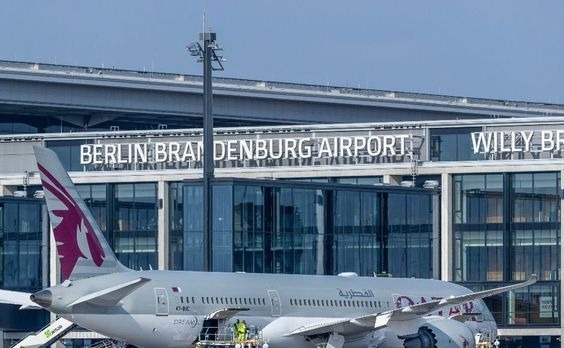
The Berlin Brandenburg Airport (BER), named in honor of the former West Berlin mayor and Nobel Peace Prize winner Willy Brandt, represents modern Germany's commitment to connectivity and architectural clarity. Located in Schönefeld just south of the city limits, it finally unified the capital's air traffic under one roof. The main terminal (Terminal 1) is a model of modern German design—a massive, light-filled structure of glass, steel, and warm walnut wood that aims to provide a calm and dignified starting point for every journey.
Inside the check-in hall, travelers are greeted by "The Magic Carpet," a colossal red artwork by Pae White that appears to float like a shimmering cloud beneath the high ceiling. The airport's layout is centered around the "one-roof" concept, where all major functions are organized in a logical, linear fashion to minimize stress for the passengers. Beyond its functional role, the airport is a hub of German engineering, featuring integrated rail links that whisk travelers to the heart of the city in less than half an hour via the Airport Express (FEX) and S-Bahn trains.
For those with time to spare, the airport offers an expansive observation deck with views over the runways, where the choreography of modern aviation plays out against the flat, wide horizon of the Brandenburg plains. While its construction was a long and complex journey in itself, BER today stands as a functional and elegant gateway, welcoming the world to a city that is constantly reinventing itself and its role on the global stage.
Travel Tip: The Airport Express (FEX) train is currenty the fastest way to reach Berlin Central Station (Hauptbahnhof). Make sure to validate your train ticket at the yellow or red machines on the platform before boarding, as failure to do so can result in a heavy fine.
Luxury Insight: For a seamless arrival, arrange for the "VIP Service" at BER. This includes being met at the aircraft door, escorted to a private luxury lounge for passport control and baggage claim, and then whisked away in a chauffeur-driven limousine directly to your hotel.
3. Moritzburg Castle: A Baroque Fairytale on Water
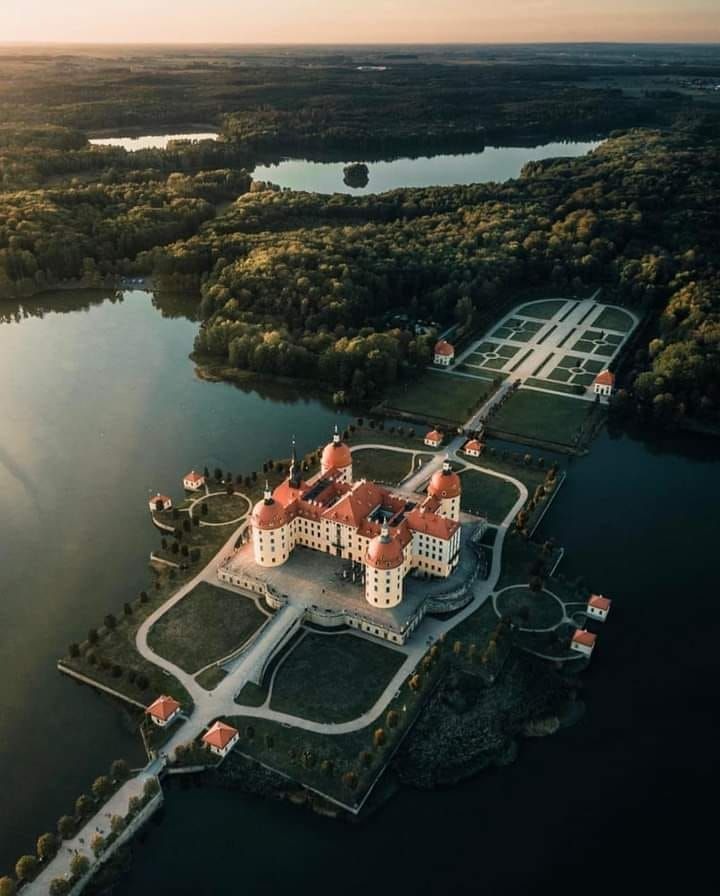
Located just a short drive north of Dresden, Moritzburg Castle is one of Europe's most beautiful examples of Baroque architecture. Resting elegantly on a man-made island in the center of a tranquil lake, the castle’s four round towers and symmetrical yellow-and-white facades create a mirror reflection in the water that seems almost too perfect to be real. Originally built as a renaissance hunting lodge in the 16th century, it was transformed into this stunning "Pleasure Palace" by Augustus the Strong, the Elector of Saxony, in the 1700s.
The interior of the castle is a journey into the opulent world of the Saxon royalty. It houses one of the world's most significant collections of monumental red deer antlers, displayed in the "Stone Hall," and the legendary "Feather Room," which is decorated with over a million iridescent feathers from peacocks, pheasants, and ducks. The surrounding parklands and ponds were designed for grand royal hunts and festivals, and today they offer a network of peaceful walking trails that reveal the castle from every angle, each more picturesque than the last.
Moritzburg gained international cult status as the main filming location for the 1973 film "Three Wishes for Cinderella." Every winter, the castle hosts a special exhibition dedicated to the movie, and you can even see the "golden slipper" on the grand staircase. Whether you are exploring the ornate interiors or taking a romantic horse-drawn carriage ride through the surrounding forests, Moritzburg provides a magical, out-of-time experience that captures the true essence of German romanticism.
Travel Tip: The castle is easily accessible from Dresden by car or by the historic "Lößnitzgrundbahn" narrow-gauge steam train—a wonderful and nostalgic way to arrive. Check the castle's website for seasonal opening hours of the "Little Pheasant Castle" (Fasanenschlösschen) nearby.
Luxury Insight: Book a private guided tour of the "Feather Room" followed by a gourmet picnic prepared by the castle's catering team, served on the lakeside terrace where you can enjoy the view of the palace as the sun begins to dip.
4. The Reichstag: A Dome of Transparency
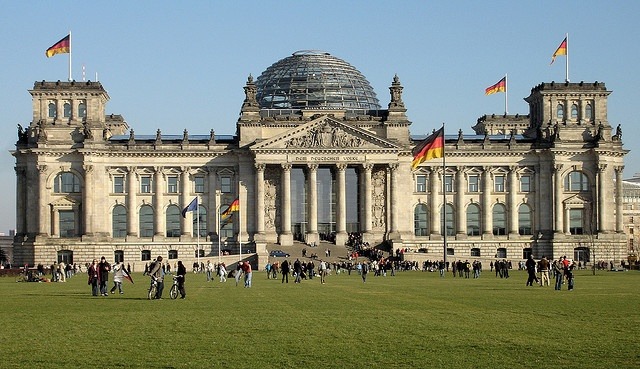
The Reichstag building in Berlin is one of the world's most iconic symbols of democratic governance. The historic 1894 structure, with its heavy stone facade and classical columns, was famously destroyed by fire in 1933 and again damaged during the Battle of Berlin in 1945. Following the reunification of Germany, the building underwent a revolutionary transformation by architect Norman Foster, who added a massive, high-tech glass dome that has become a centerpiece of the Berlin skyline.
The dome is not just an architectural marvel; it is a literal manifestation of the people's oversight of their government. A spiral ramp allows visitors to ascend to the very top of the dome, where they can look down through a funnel of mirrors into the debating chamber of the German parliament (Bundestag) below. This design ensures that the public is symbolically "above" their representatives. The views from the top are spectacular, offering a 360-degree panorama of the city, including the Brandenburg Gate, the Spree River, and the Tiergarten park stretching toward the western districts.
Inside the historic part of the building, traces of the past have been deliberately preserved, including graffiti left by Soviet soldiers in 1945, serving as a constant reminder of the weight of history. The Reichstag stands as a beacon of modern Germany—open, transparent, and international—and a visit to its roof terrace and dome at night provides an unforgettable view of the "New Berlin" in all its vibrant energy.
Travel Tip: Registration for the Reichstag dome is mandatory and must be done in advance via the official Bundestag website. It is free of charge, but security is tight, so bring your passport or ID. If the dome is booked, check for a table at the Rooftop Restaurant "Käfer" for a high-end alternative with similar views.
Luxury Insight: Dine at the Käfer Dachgarten-Restaurant, the only public restaurant in the world located in a parliament building. Request a window table at sunset to enjoy modern German cuisine while watching the dome's mirrors reflect the changing city lights.
5. Nuremberg Old Town: The Essence of Franconia
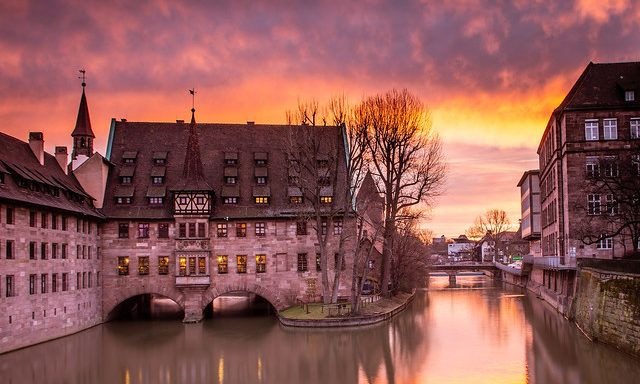
Nuremberg (Nürnberg) is a city that perfectly encapsulates the charm of old-world Germany while thriving as a center of modern industry. The historic Old Town, surrounded by five kilometers of massive stone walls, is a labyrinth of cobblestone streets, half-timbered houses, and impressive medieval churches. The city is divided by the gentle Pegnitz River, which is bridged by picturesque spans like the Hangman’s Bridge (Henkersteg) and flanked by historic warehouses that tell the story of Nuremberg's long history as a wealthy manufacturing and trading hub.
The city's silhouette is dominated by the Kaiserburg, the Imperial Castle that served as a residence for the Holy Roman Emperors for over five hundred years. Walking through the castle's courtyards and deep wells, you feel the direct connection to the heart of the medieval empire. Nuremberg is also the city of the Northern Renaissance master Albrecht Dürer; his remarkably preserved 15th-century house is now a museum that offers a glimpse into the life of one of history's greatest artists. In the winter, the city hosts the world-famous Christkindlesmarkt, filling the air with the scent of Lebkuchen (gingerbread) and grilled Nuremberg sausages.
While Nuremberg is honest about its role in the 20th century, notably with the Documentation Center at the former Nazi Party Rally Grounds and the Memorium Nuremberg Trials, it has emerged as a city of peace and human rights. Today, it is a vibrant, hospitable destination where traditional Franconian beer culture and world-class museums exist side-by-side, making it an essential stop for anyone wanting to understand the deep layers of the German identity.
Travel Tip: Wear sturdy walking shoes, as the Old Town is mostly cobblestone and involves some uphill climbs to the castle. Be sure to try the "Nürnberger Rostbratwurst"—traditionally served as "Drei im Weckla" (three in a bun)—at one of the small historic sausage kitchens near the market.
Luxury Insight: Stay at a Boutique Hotel in the "Weinstadel" area or the Sheraton Carlton Nuremberg. For a truly high-end experience, book a private "Dürer & Wine" tour, which connects the history of the legendary artist with a private tasting of premium Franconian silvaner wines in a historic cellar.
6. Lake Tegel: Berlin’s Forgotten Resort
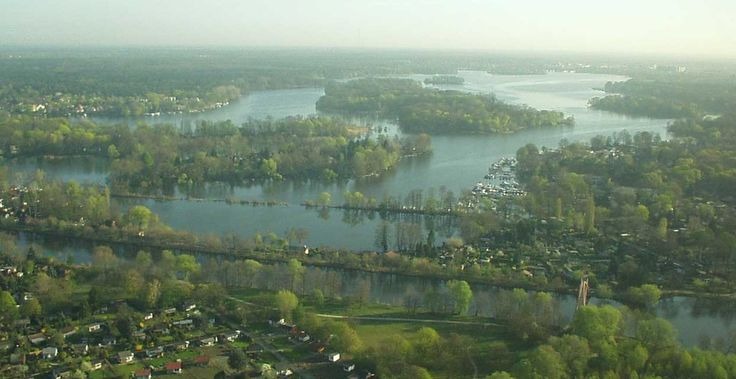
Located in the northwest district of Reinickendorf, Lake Tegel (Tegeler See) is the second-largest lake in Berlin and a cherished secret for those who love nature within the city limits. It offers a stunning landscape of seven islands, numerous small bays, and crystal-clear water that feels a world away from the urban noise of Alexanderplatz. The lake has been a popular destination for Berliners since the 19th century, when the Greenwich Promenade was first established as a place for elegant Sunday strolls under the shade of ancient trees.
The promenade is the center of life at the lake, lined with red benches and traditional boat docks where you can hire anything from a pedal boat to a sailing yacht. From here, you can also catch a larger steamer tour that navigates through the islands and explores the upper reaches of the Havel River. Nearby, hidden in a quiet park, stands the "Dicke Marie" (Fat Mary), an oak tree estimated to be over 800 years old—making it the oldest living inhabitant of the city. Just a short walk from the water is the Humboldt Palace (Schloss Tegel), the former home of the famous brothers Wilhelm and Alexander von Humboldt, providing a touch of Prussian intellectual history to the natural beauty.
Lake Tegel is remarkably clean and offers several designated swimming areas with white sandy beaches that make you feel like you are on the Baltic coast. Whether you are enjoying a coffee at a lakeside café, exploring the forested trails of the Tegel Forest, or watching the sunset paint the water in shades of pink and gold, Lake Tegel reveals the serene, green, and leisurely side of Berlin that visitors often miss.
Travel Tip: The lake is easily reached via the U6 Altermitt-line to Alt-Tegel station. From the station, it is just a five-minute walk through a charming pedestrian area to the water. If you enjoy hiking, follow the signs for the "Humboldt Trail" which leads through some of the most beautiful parts of the forest.
Luxury Insight: Rent a private vintage motorboat for a day of exploring the lake's islands. Many rental companies offer catering packages, allowing you to enjoy a champagne lunch on the quiet waters between the islands of Maienwerder and Valentinswerder.
7. Neuschwanstein Castle: The Dream of the Mad King
Rising like a white limestone dream from the rugged foothills of the Bavarian Alps, Neuschwanstein Castle is perhaps the most famous building in the world. Commissioned by King Ludwig II of Bavaria in 1869 as a private retreat and a monumental tribute to the composer Richard Wagner, it was intended to be a theatrical stage set brought to life. Its soaring turrets, elegant arches, and dramatic location inspired Walt Disney's Sleeping Beauty castle, cementing its image as the ultimate fairytale palace in the global imagination.
Ludwig was an eccentric and reclusive monarch, often called the "Mad King," who poured his entire fortune into his building projects. Neuschwanstein was never home to a queen or used for state affairs; it was a sanctuary of the imagination. Inside, the rooms are a riot of medieval legends and operatic themes, featuring a throne room inspired by Byzantine churches (though it lacks a throne) and a singer's hall decorated with scenes from the legend of Parzival. Despite its medieval appearance, the castle was at the cutting edge of 19th-century technology, featuring central heating, flushing toilets, and even a telephone system.
The best perspective of the castle is from the Marienbrücke (Queen Mary's Bridge), which spans the Pöllat Gorge high above a thundering waterfall. From here, you can see the castle silhouetted against the emerald mountains or the morning mist of the Schwangau valley. It is a monument to the power of a single man's vision and a poignant reminder of a king who preferred his dreams of "old knightly castles" to the realities of modern politics.
Travel Tip: Neuschwanstein is one of the busiest spots in Germany. You MUST book your guided tour tickets weeks in advance. If you don't have a ticket, you can still walk up to the castle and the bridge for the views. The walk from the village of Hohenschwangau takes about 30-40 minutes uphill, or you can take a horse-drawn carriage.
Luxury Insight: Stay at the AMERON Neuschwanstein Alpsee Resort & Spa, located right at the foot of the castle on the banks of the Alpine lake. Their "Castle View" rooms allow you to fall asleep while looking at the illuminated spires of Ludwig's masterpiece.
8. Berlin TV Tower: A Retro-Futuristic Icon
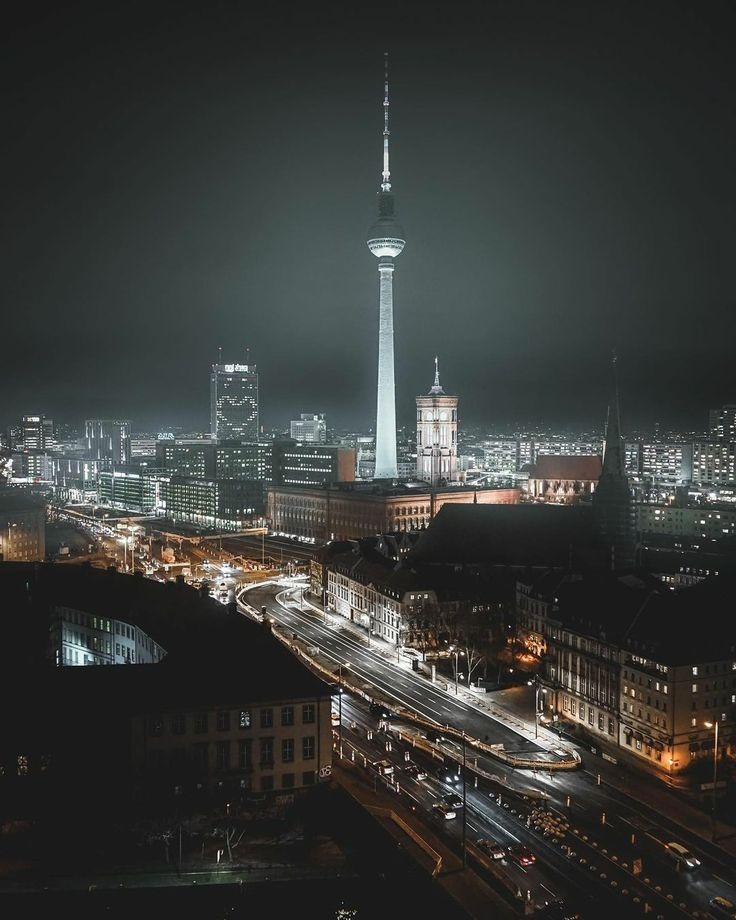
Ascending 368 meters above the central Alexanderplatz, the Berlin TV Tower (Fernsehturm) is the tallest structure in Germany and the undisputed center-point of the capital's skyline. Built by the GDR government in the late 1960s to demonstrate the superiority of socialist engineering, it has since overcome its political origins to become a globally recognized icon of a unified and creative Berlin. Its sleek, rocket-like design and shimmering metal sphere give it a retro-futuristic charm that looks as if it were plucked from a vintage science fiction movie.
The observation deck, located at 203 meters inside the sphere, provides a staggering 360-degree panorama of the city. On a clear day, your gaze can travel up to 42 kilometers, allowing you to see the entire grid of the city, the winding Spree River, and the massive greenery of the Tiergarten. One floor above the observation deck is the revolving restaurant "Sphere," which slowly rotates once every hour, allowing you to enjoy a meal while the entire city moves past your window. A famous quirk of the tower is the "Pope's Revenge"—a cross-shaped reflection that appears on the tiled sphere when the sun hits it, which the secular communist planners had tried in vain to eliminate.
The TV Tower is more than just a tourist attraction; it is the ultimate orientation tool for anyone exploring Berlin. Whether you are navigating by it from the ground or looking out from its heights, it serves as a constant and elegant reminder of Berlin's journey from a divided city of the Cold War to the vibrant, open metropolis of today. It is a place where you can literally stand above history and watch the future of the city being built.
Travel Tip: The lines for the elevator can be very long. Booking a "Fast View" ticket online in advance is essential to skip the queues. Plan your visit for early morning or late night to enjoy the views with fewer people; the tower is open until midnight during the summer months.
Luxury Insight: Book a "Window Table" at the Sphere restaurant for a late-night dinner. Watching the millions of lights of the city shimmer below while you enjoy a three-course menu of modern European cuisine is one of the most exclusive and romantic experiences Berlin has to offer.
A Journey through Deutschland: Germany is a country that stays with you, leaving an indelible mark through its hospitality, its history, and its staggering beauty. From the quiet shores of Lake Tegel to the soaring heights of the TV Tower, from the scarred stones of a memorial church to the fairytale spires of Neuschwanstein, your German adventure will be a collection of moments that bridge the gap between the ancient and the avant-garde. We hope this guide inspires you to discover the heart of Europe for yourself. Gute Reise!