
Spain: Passion and Fiesta
Spain
Spain is a land that dances to the rhythm of passion, where every city square tells a story of empires, artists, and adventurers. It is a country of staggering diversity, stretching from the green, misty mountains of the north to the sun-scorched plains of Andalusia and the azure waters of the Mediterranean islands. Here, the legacy of the Romans, the Moors, and the Renaissance kings has orated a cultural tapestry that is as vibrant as it is deep. Whether you are exploring the whimsical architecture of a modernist visionary or finding silence in the marble halls of an ancient palace, Spain offers a sensory feast that is both timeless and intensely alive. This guide invites you to explore 8 essential Spanish destinations that define the heart and soul of the Iberian Peninsula.
1. Sagrada Família: Gaudi’s Eternal Prayer in Stone
The Basilica i Temple Expiatori de la Sagrada Família is the undisputed crown jewel of Barcelona and the life's work of the visionary architect Antoni Gaudí. Construction began in 1882, and even as the world moves through the 21st century, the work continues, making it one of the longest-running architectural projects in human history. Gaudí’s design is a radical departure from traditional Gothic cathedrals, combining organic shapes found in nature with complex geometric structures and deeply symbolic religious motifs.
The exterior of the basilica features three grand facades: the Nativity, the Passion, and the yet-to-be-completed Glory. Each is a world of detail unto itself, from the rough, life-like carvings of the Nativity to the stark, angular sculptures of the Passion. However, the true miracle of the Sagrada Família is found inside. Entering the nave is like stepping into a divine forest; columns rise like massive stone trees, branching at the ceiling to support the weight of the towers. The stained glass windows, arranged in a spectrum from cool blues and greens in the east to fiery oranges and reds in the west, bathe the interior in a perpetually shifting kaleidoscopic light.
Gaudí knew he would not live to see the completion of his masterpiece, and he left behind a legacy that has challenged and inspired generation of architects. For the traveler, a visit to the Sagrada Família is not just about seeing a famous building; it is about witnessing the convergence of faith, genius, and a level of artistic dedication that is truly rare in the modern world. It is a place where every carved stone and every beam of light is part of a silent, monumental prayer.
Travel Tip: Spain's high-speed AVE trains are the fastest and most comfortable way to travel between major cities like Barcelona, Madrid, and Seville. Always book your tickets in advance to secure the best rates and a guaranteed seat.
Luxury Insight: For an unparalleled view of the basilica, book a Terrace Suite at the Majestic Hotel & Spa. Their rooftop terrace offers a panoramic view across the Eixample district with the spires of the Sagrada Família standing as the magnificent centerpiece.
2. The Alhambra: The Red Fortress of the Moors
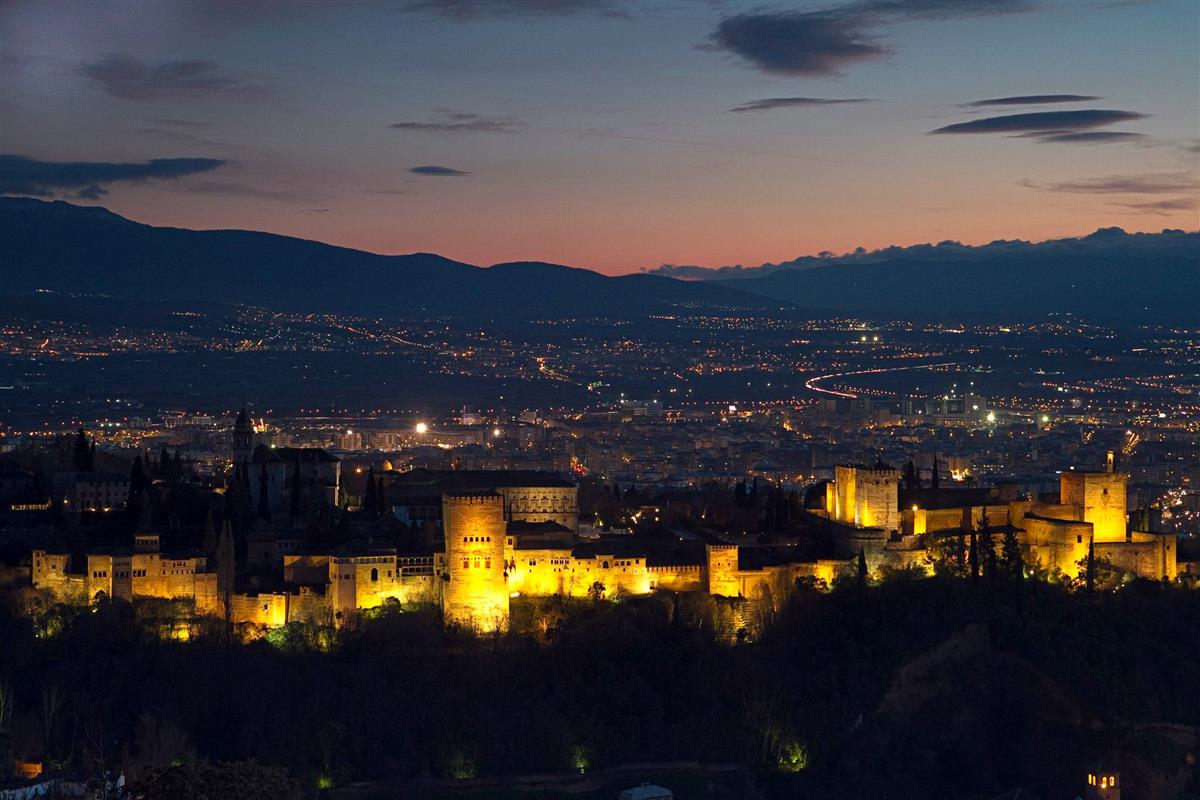
Perched majestically on the Sabika Hill against the backdrop of the snow-capped Sierra Nevada, the Alhambra is a breathtaking palace and fortress complex that serves as the final and most sophisticated testament to Moorish rule in Spain. Named "Al-Hamra" (The Red One) for the color of its stone walls at sunset, this UNESCO World Heritage site is widely considered the pinnacle of Islamic architecture in Europe. It is a place of refined beauty, where every courtyard and every hall was designed to be a "Paradise on Earth."
The heart of the experience is the Nasrid Palaces, a series of interconnected rooms and courtyards that showcase the incredible artistry of the 14th century. The Courtyard of the Lions, with its central fountain supported by twelve marble lions and surrounded by a gallery of 124 slender columns, is a masterpiece of symmetry and light. The walls are covered in "mokarabe" (honeycomb) carvings and intricate tile mosaics that seem to vibrate with detail. Nearby, the Generalife—the summer palace and gardens of the sultans—offers a cooler, greener escape, where the constant sound of running water from fountains and irrigation channels creates an atmosphere of profound tranquility.
Walking through the Alhambra is a journey into a lost World of elegance and intellectual achievement. The views over the whitewashed Albaicín district from the fortress's watchtowers are unforgettable, providing a clear sense of why the Moorish kings were so reluctant to surrender this "Jewel of Andalusia." It is a place where history feels tangible, whispered through the rustle of the cypress trees and the gentle splash of water in the marble basins.
Travel Tip: Tickets for the Alhambra sell out weeks in advance, especially for the Nasrid Palaces, which have strictly timed entry. Make your reservation as soon as you know your travel dates to avoid disappointment.
Luxury Insight: Stay at the Parador de Granada, which is located right within the Alhambra complex. This former convent offers the unique experience of waking up inside the palace grounds, allowing you to wander the gardens in the quiet early morning hours.
3. Park Güell: A Whimsical Journey through Nature
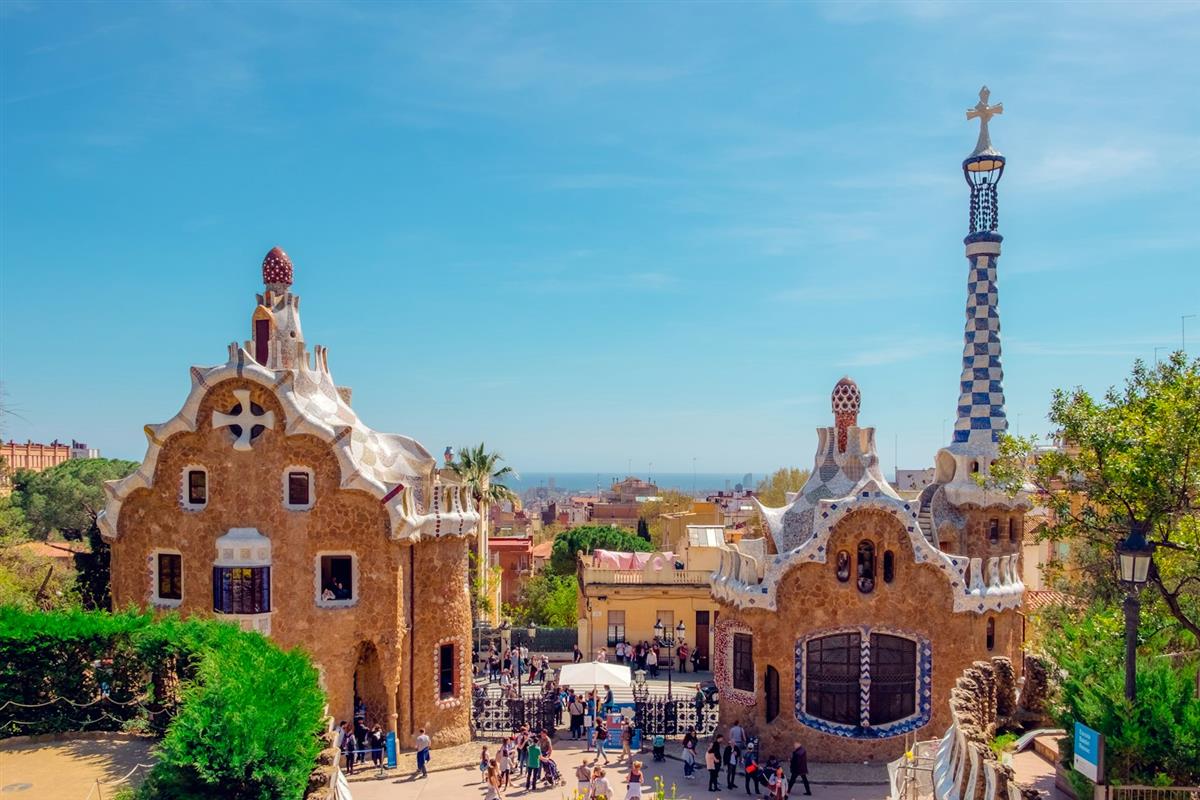
Park Güell is another of Antoni Gaudí’s extraordinary contributions to Barcelona, originally intended as a luxury housing estate but later converted into a public park. Here, Gaudí’s "naturalist" phase is on full display; he sought to harmonize architecture with the rugged landscape of Carmel Hill, creating a whimsical wonderland where stone structures seem to grow directly out of the earth like trees or waves. It is a place of boundless imagination, color, and playfulness.
The entrance to the park is guarded by two fairytale-like pavilions with undulating roofs covered in "trencadís"—a mosaic technique using broken ceramic tiles. The famous Dragon Stairway, featuring the iconic multicolored salamander (often called the dragon of Barcelona), leads up to the Hypostyle Room, a vast forest of 86 Doric columns that support the massive terrace above. This main terrace, known as the Nature Square, is bordered by the world's longest undulating bench, covered in a kaleidoscopic array of tiles and offering one of the most famous panoramic views over the city and the Mediterranean Sea beyond.
Wandering through the park's winding paths and stone viaducts, you feel as though you have stepped into a masterpiece of Art Nouveau. It is a celebration of curves over straight lines and organic life over industrial rigidity. Whether you are exploring the Gaudi House Museum (his former residence) or simply sitting on the mosaic bench watching the sun set over the city, Park Güell is a joyous and essential part of the Barcelona experience.
Travel Tip: The park is large and involves significant walking on hilly terrain. Make sure to choose a morning time slot for your visit to avoid the midday heat, and wear comfortable shoes with good traction.
Luxury Insight: Book a private sunset tour of the park with an architectural expert. This allows you to bypass the crowds and learn about the deep mythological and Masonic symbolism hidden within Gaudi's designs.
4. Plaza de España: Seville's Cinematic Grandeur
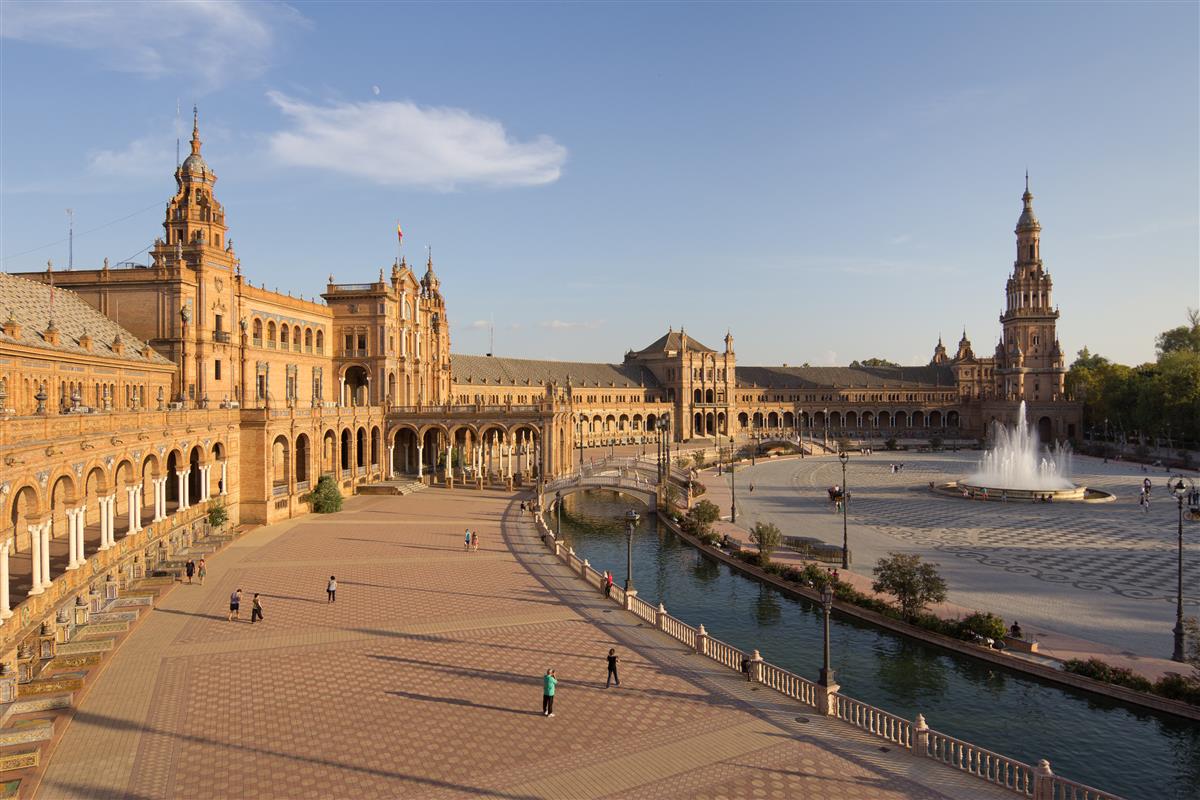
Built for the Ibero-American Exposition of 1929, the Plaza de España in Seville is a monumental semi-circular complex that combines elements of Renaissance, Baroque, and Neo-Moorish styles. It is a spectacle of light, color, and immense scale, widely considered one of the most beautiful public squares in the world. The main building is a vast, arcaded structure with towering spires at each end, all reflected in a 500-meter-long canal that flows gracefully through the square.
One of the most charming features of the plaza is the series of 48 tiled alcoves, each representing one of the provinces of Spain. These "provincial seats" are decorated with intricate maps and historical scenes in traditional Andalusian "azulejo" tiles, making the plaza a popular spot for Spanish visitors to photograph themselves with their home region. Four ornate bridges, representing the ancient kingdoms of Spain (Castile, León, Aragon, and Navarre), cross the canal where you can rent small boats for a gentle row under the bridges' stunning ceramic railings.
The Plaza de España has an almost cinematic quality, a fact recognized by filmmakers who have used it as a backdrop for everything from "Star Wars: Attack of the Clones" to "Lawrence of Arabia." Whether you are listening to a live flamenco performance under the arches or simply watching the sun set over the Maria Luisa Park, the plaza exudes a feeling of Andalusian majesty and festive spirit that is truly unforgettable.
Travel Tip: The plaza is located within the lush Maria Luisa Park. After your visit, take some time to explore the park's hidden paths and fountains, or enjoy a ride in a horse-drawn carriage—a quintessential Seville experience.
Luxury Insight: Stay at the Hotel Alfonso XIII, a landmark luxury hotel commissioned for the same 1929 exposition. It is one of the most prestigious hotels in the world, located just a short walk from the plaza and offering rooms that feel like royal chambers.
5. The Royal Palace of Madrid: A Monument to Bourbon Elegance
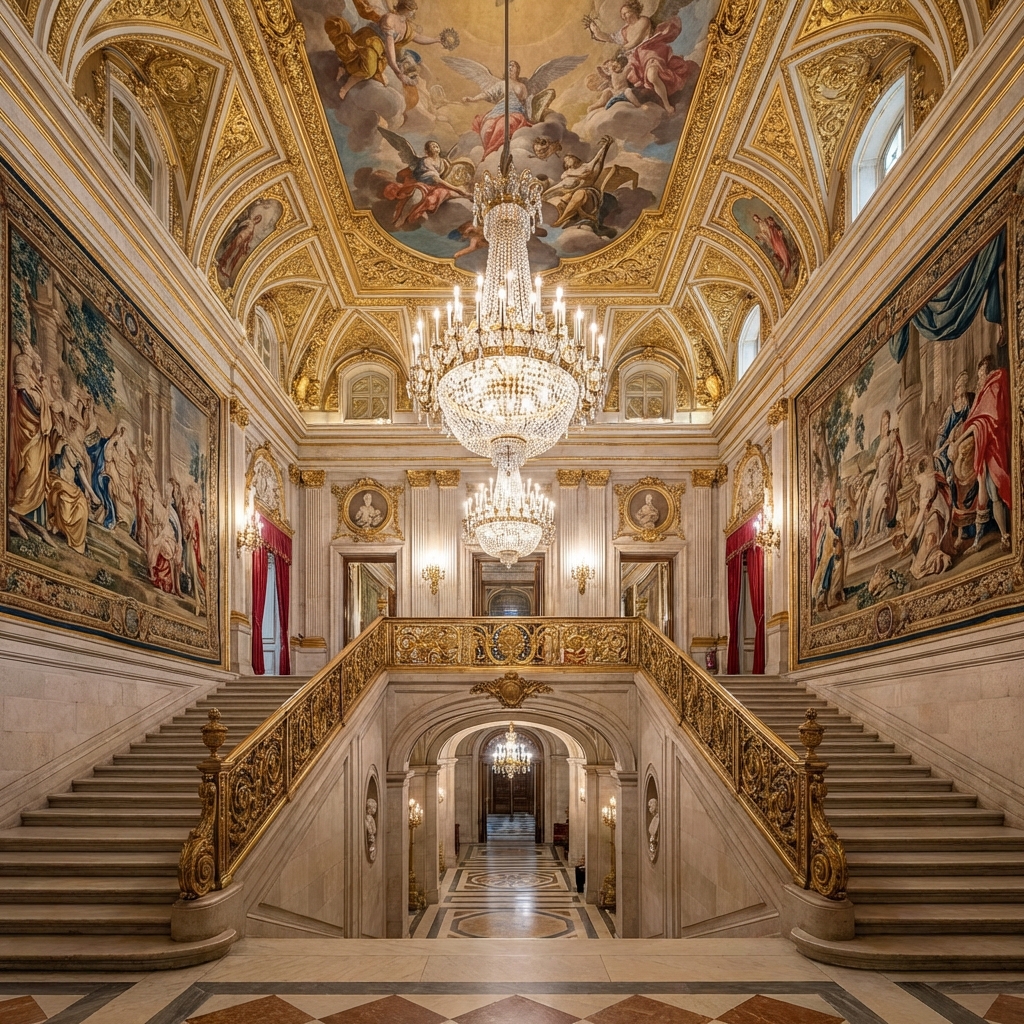
The Palacio Real de Madrid is the official residence of the Spanish Royal Family, and with over 3,400 rooms, it is the largest functioning royal palace in Western Europe. While the royals today live in the more modest Palace of Zarzuela, the Palacio Real remains the heart of the Spanish state, used for ceremonies, banquets, and official visits. Built in the late 18th century on the site of a medieval Moorish fortress, it is a masterpiece of late Baroque architecture, designed to rival the grandeur of Versailles.
The interior is a breathtaking showcase of wealth and art. The Throne Room, with its crimson velvet walls and massive crystal chandeliers, remains almost exactly as it was during the reign of Charles III. The palace also houses a world-class collection of tapestries, porcelain, and watches, as well as the Royal Armory—one of the finest collections of medieval and Renaissance weaponry in existence. Don't miss the Royal Library, which contains historic manuscripts and first editions of Spanish literature, or the Royal Pharmacy, where hundreds of historic jars and instruments highlight the history of medicine at the Spanish court.
Outside, the palace is framed by the Sabatini Gardens and the Campo del Moro, offering beautifully manicured escapes from the bustle of the capital. Whether you are witnessing the solemn Changing of the Guard or exploring the opulent state apartments, the palace provides a profound sense of the grandeur and history of the Spanish monarchy, standing as a silent, majestic sentinel in the heart of Madrid.
Travel Tip: The palace is often closed for official state events, so always check the official website for closures before your visit. Arriving at the opening hour is the best way to see the most famous rooms before the large tour groups arrive.
Luxury Insight: Arrange for a private guided "Treasures of the Palace" tour. This allows you access to some of the collections not always open to the general public and provides a deeper understanding of the royal intrigue that has shaped Spanish history.
6. The Mosque-Cathedral of Córdoba: A Forest of Two Faiths
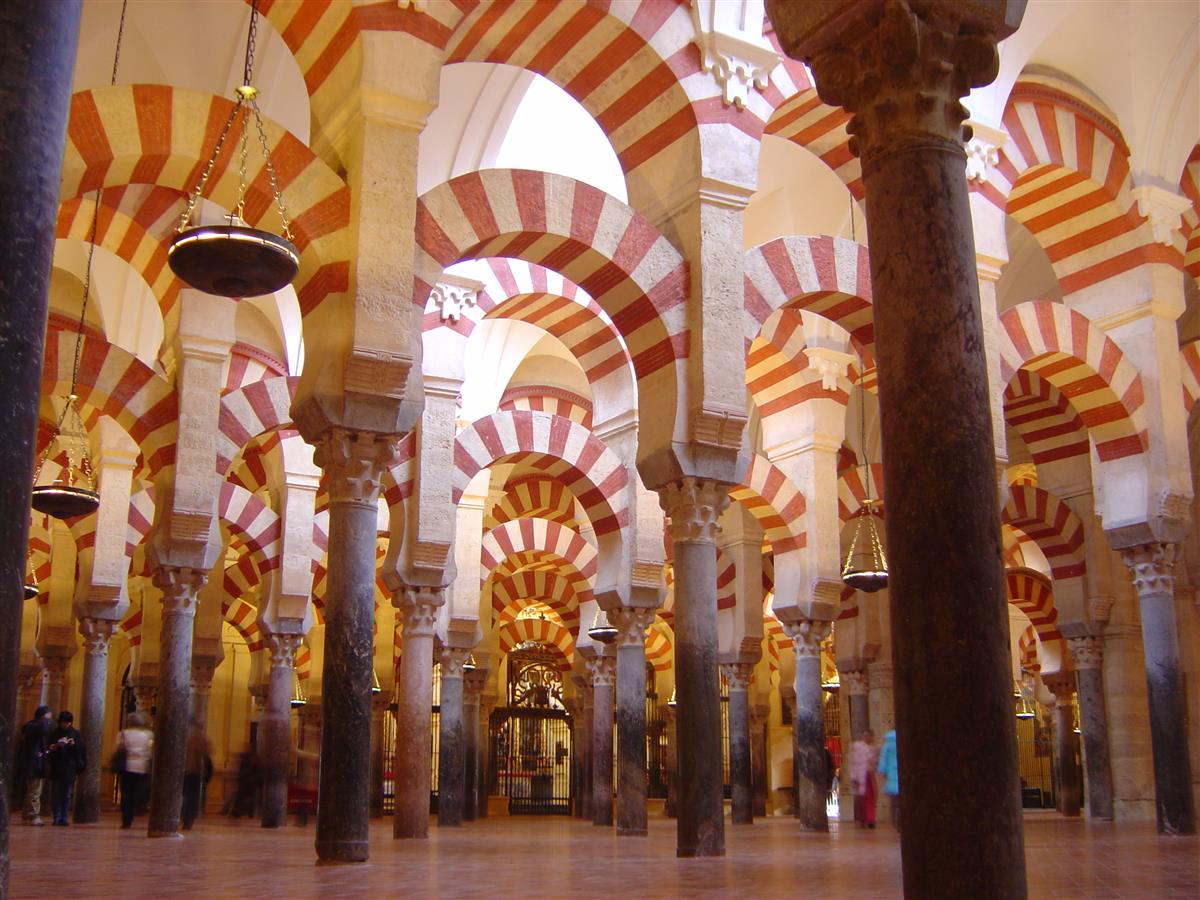
The Mezquita-Catedral de Córdoba is one of the most unique and historically significant buildings in the world. It is a physical manifestation of Spain's complex religious history—a massive 8th-century mosque that was converted into a Christian cathedral in the 13th century. What remains today is a building of breathtaking duality, where the sober, repetitive patterns of Islamic architecture exist in a radical, beautiful tension with the opulent grandeur of the Renaissance and Baroque cathedral that was built directly into its center.
The most famous feature is the "prayer hall," a vast space containing over 850 columns of jasper, onyx, marble, and granite. These columns support a system of double arches made of red and white stone—an architectural innovation that allowed for a higher ceiling and created a "forest of stone" that feels infinitely deep. The "mihrab" (prayer niche) is a masterpiece of Byzantine mosaic work, bathed in golden light. In contrast, the cathedral nave, located at the heart of this forest, features a soaring choir and a main altar of mahogany and marble, creating a surprising and dramatic shift in perspective as you move through the space.
Walking through the Mezquita is an exercise in cultural layering. It is a place where you can find a Roman-era pillar, an Islamic arch, and a Renaissance carving all within the same eye-line. It is a monument that speaks to the shared history of two great faiths and the enduring architectural genius of the Andalusian past, standing as a silent witness to centuries of transformation and coexistence.
Travel Tip: Córdoba is very hot in the summer. Visit the Mezquita in the early morning (free entry is often available between 8:30 and 9:30 AM for quiet prayer time) or consider the "The Soul of Córdoba" night-time visit for a more atmospheric experience with light and sound.
Luxury Insight: Stay at the Palacio del Bailío, a five-star hotel housed in a former manor house that contains its own Roman ruins and an ultra-modern spa that uses traditional Roman and Moorish bathing techniques.
7. The City of Arts and Sciences: Valencia's Futuristic Oasis
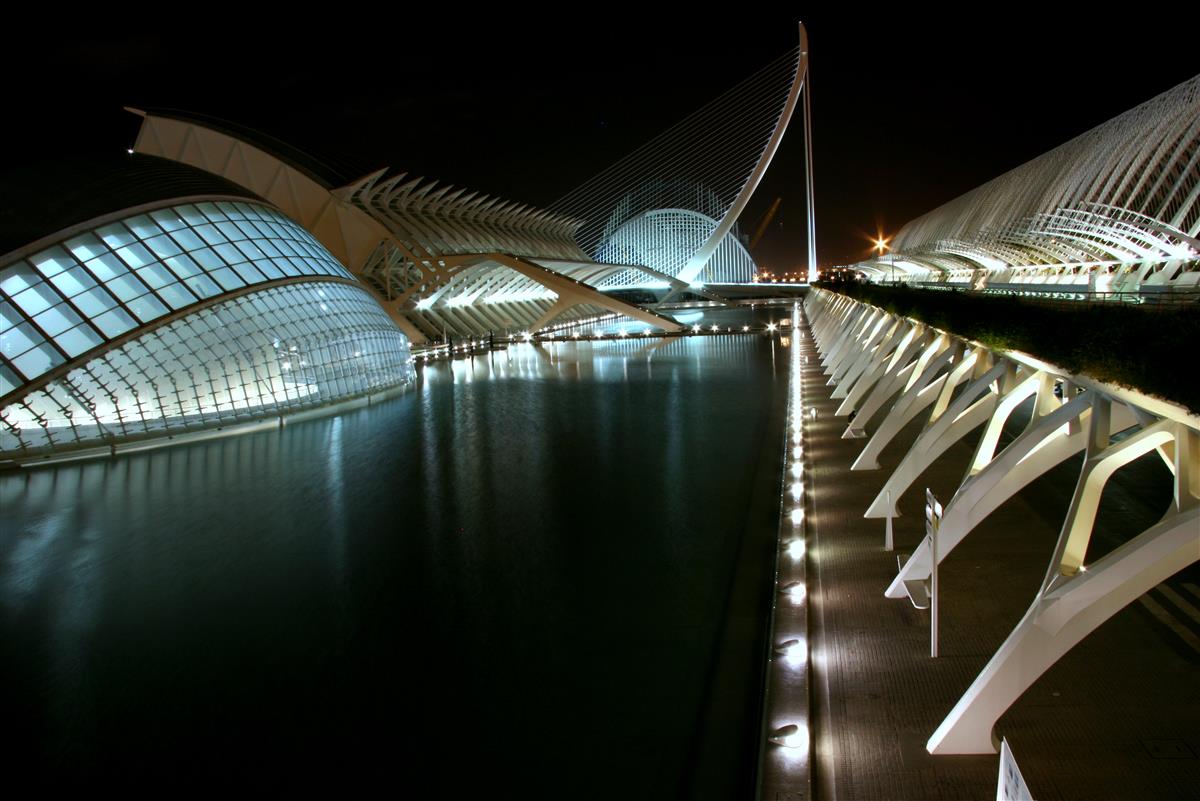
Designed by the world-famous architect Santiago Calatrava and Félix Candela, the City of Arts and Sciences in Valencia is a staggering ultra-modern complex that looks like a colony from a distant future. Built in the former bed of the Turia River, this series of white, avant-garde structures is surrounded by vast shimmering blue pools, creating a landscape of light and reflection that is unique in Europe. It is a celebration of human knowledge, art, and the unlimited possibilities of modern engineering.
The complex is composed of several distinct buildings, each with its own striking silhouette. L’Hemisfèric, designed to look like a giant human eye, houses an IMAX cinema and planetarium. El Museu de les Ciències Príncipe Felipe is a massive science museum whose structure resembles the skeleton of a prehistoric creature. Perhaps the most famous is L’Oceanogràfic, the largest aquarium in Europe, which is shaped like an elegant lily flower and contains marine habitats from every corner of the globe. At the end of the complex stands the Palau de les Arts Reina Sofía, a soaring opera house that appears like a futuristic helmet or a ship's hull.
Whether you are walking through the Umbracle—a landscaped walkway covered in climbing plants—or exploring the depths of the Arctic exhibit in the aquarium, the City of Arts and Sciences is a place of wonder. It represents a bold, forward-looking Spain that is as comfortable with futuristic design as it is with its ancient traditions, making it a must-visit for families, photographers, and anyone who wants to see the architecture of tomorrow.
Travel Tip: The complex is vast, so allow at least a full day to explore. You can purchase a combined ticket for the museum, aquarium, and cinema, which is often much cheaper than buying them separately.
Luxury Insight: Enjoy an al fresco dinner at the "Submarine Restaurant" located within L’Oceanogràfic. You are literally surrounded by a massive aquarium, allowing you to dine on fine Mediterranean cuisine while manta rays and sharks glide past your table.
8. Ibiza: The White Island of Duality
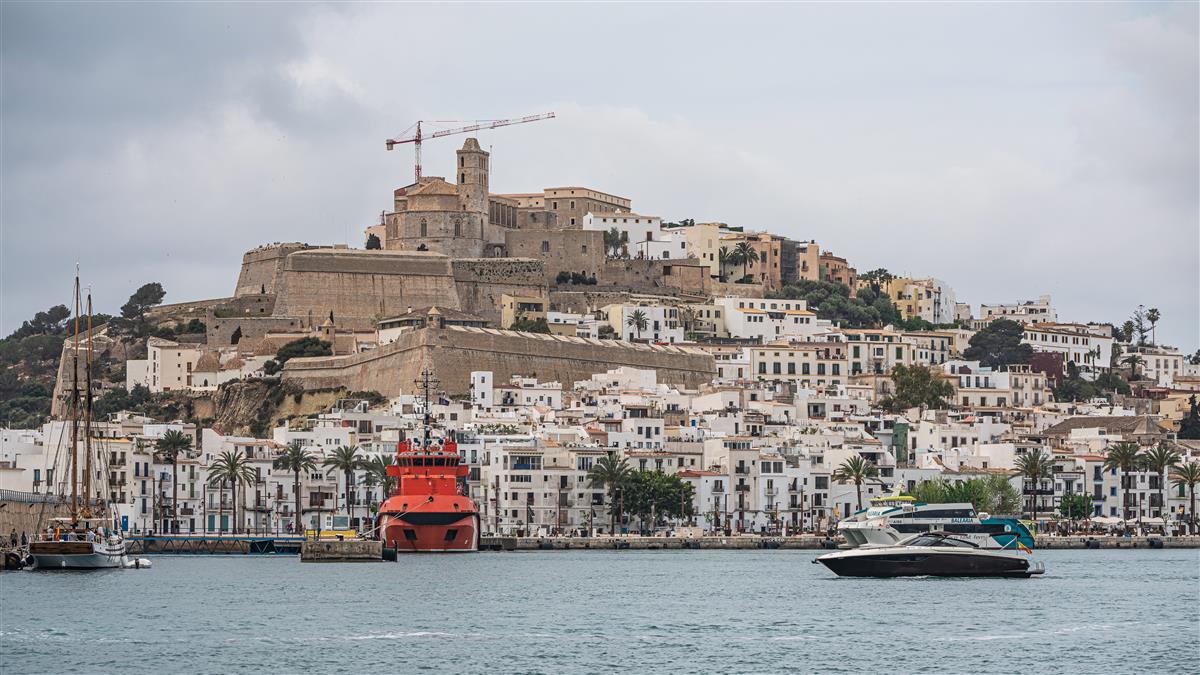
While Ibiza is globally famous for its electric nightlife and world-class DJs, there is a whole other side to the "White Island" that is just as captivating. Beyond the neon lights of the clubs lies a landscape of rugged pine forests, hidden turquoise coves, and ancient stone architecture that has attracted artists, hippies, and dreamers for decades. It is an island of profound duality, where you can dance until dawn and then find absolute silence in a secret Mediterranean bay just a few miles away.
The heart of Ibiza's history is Dalt Vila, the island's old town and a UNESCO World Heritage site. Enclosed by massive 16th-century fortification walls, its narrow, winding streets lead up to a majestic cathedral with views that stretch all the way to the neighboring island of Formentera. In the north, the island retains its bohemian spirit, with markets like Las Dalias and Punta Arabí offering hand-crafted goods and a glimpse into the island's 1960s counter-culture heritage. For many, the true soul of Ibiza is found at Es Vedrà, the mysterious limestone rock island that rises dramatically from the sea at sunset, said to be one of the most magnetic spots on earth.
Ibiza is a place where you can find a high-end beach club with world-class service right next to a centuries-old "finca" (farmhouse) serving local organic produce. Whether you are sailing around the pristine waters of Formentera or getting lost in the whitewashed streets of Santa Gertrudis, Ibiza offers a unique blend of sophisticated luxury and raw natural beauty that is impossible to resist.
Travel Tip: Formentera is just a 30-minute ferry ride from Ibiza Town. Renting a bicycle on Formentera is the best way to explore its crystal-clear beaches, which are often compared to the Caribbean for their clarity and color.
Luxury Insight: Charter a private vintage sailing yacht for a day of exploring the hidden "Calas" of the northern coast. Having a private chef on board to prepare fresh seafood as you watch the sunset over Es Vedrà is the ultimate Ibiza experience.
The Endless Passion of Spain: Spain is a country that stays with you, long after you have left its sun-drenched shores. From the architectural genius of Gaudí to the Moorish whispers of the Alhambra, every journey here is a celebration of life itself. We hope this guide inspires you to find your own rhythm in the beautiful mosaic that is Spain. ¡Buen viaje!